Sunday Sauce and Secrets: The Family Recipes That Found a New Home in Paramus
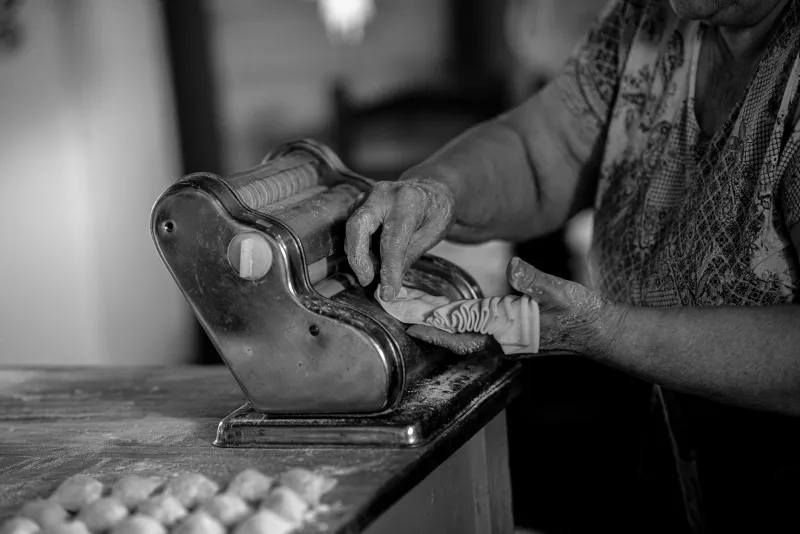
There's a particular kind of confidence you notice in a cook who learned a recipe from someone they loved. They don't measure. They taste. They adjust by feel, not by instruction. And when you ask them to write it down, they give you a look like you've just asked them to translate a dream.
That's the tradition at the heart of Italian family cooking — and it's alive and well in Paramus, New Jersey, a town that has quietly accumulated a remarkable depth of Italian culinary heritage over the past several decades. The restaurants here aren't just serving Italian food. Many of them are serving their Italian food. Specific, personal, rooted in geography and memory in ways that don't show up on the menu.
We spent some time talking to the people behind the kitchens about where their recipes came from, what they've held onto, and what they've had to let go.
A Pot of Sauce That Crossed the Atlantic
For many Italian-American families in the Northeast, Sunday sauce — a long-simmered tomato gravy with braised meat — is less a recipe than a ritual. The version served at several Paramus establishments traces its origins not to a cookbook but to a specific kitchen in southern Italy, carried over in someone's memory during the great waves of Italian immigration in the early 20th century.
One chef, whose family came from a small town outside Napoli three generations back, describes the sauce his grandmother made as something he's spent his entire career trying to recreate. "She never wrote anything down. She'd been making it since she was a girl, and her mother made it before her. I watched her hands more than I watched the pot."
The key, he says, isn't the tomatoes (though he's particular about those) or the meat (though he uses a specific cut his grandmother preferred). It's the sequence — when the onion goes in, how long the paste cooks before the tomatoes are added, the moment you know to lower the flame. "It's a feel. You can't learn it from a recipe card. You learn it by standing in the kitchen and paying attention."
His version of that sauce has been on the menu for years. He's never changed it. He says he never will.
From Calabria to New Jersey: The Spice That Came With Them
Northern Italian food tends to get more attention in American restaurants — the cream sauces, the risottos, the butter-forward dishes of Lombardy and the Veneto. But a significant portion of Italian immigration to New Jersey came from the south: Calabria, Sicily, Campania, Basilicata. And the food those families brought with them is bolder, spicier, and built around different pantry staples.
Calabrian cuisine, in particular, is defined by 'nduja (a spreadable, fiery cured pork), dried chiles, and preserved vegetables. One Paramus restaurateur whose grandparents came from a hill town in Calabria in the 1950s still makes a pasta dish that her grandmother brought over almost unchanged: rigatoni with 'nduja, crushed tomatoes, and a specific dried chile her family used to grow in their backyard garden in Reggio Calabria.
"We tried to grow the same peppers here when I was a kid," she laughs. "New Jersey isn't exactly Calabria. But we found a source eventually, and now I import them. My grandmother would have thought I was ridiculous. She'd have just used whatever was in the garden."
The dish is on the menu, and it sells out regularly. She says customers often tell her it's the spiciest thing they've ever ordered from an Italian restaurant — which, she notes with some pride, is exactly how her grandmother would have wanted it.
The Recipe That Almost Didn't Survive
Not every family recipe made it across intact. Immigration, war, poverty, and the simple passage of time have erased entire culinary traditions from family memories. Some chefs in Paramus describe a process of reconstruction — piecing together dishes from fragments of memory, old letters, and conversations with elderly relatives who remembered eating something but couldn't quite recall how it was made.
One chef spent years trying to recreate a specific stuffed pasta his great-aunt used to make for Christmas — a dish from a small village in Abruzzo that he ate once as a child and never forgot. "I knew the shape. I knew it had cheese and something braised inside. I knew there was nutmeg, because I remember the smell. Everything else I had to figure out."
He talked to older members of his family. He called a cousin still living in Italy. He made dozens of versions over several years. "I don't know if it's exactly what she made. I'll never know. But it's what I think it was, and it's what I have. That has to be enough."
That pasta is now a seasonal special at his restaurant, available only around the holidays. It sells out every year.
What It Means to Serve Someone Else's Recipe
There's something philosophically interesting about a restaurant menu built on inherited recipes. The cook serving you the food didn't invent it. They received it. They're the latest link in a chain that stretches back through generations, through kitchens in other countries, through women who cooked over wood fires and men who grew their own tomatoes.
Every one of the chefs and restaurant owners we spoke with described a sense of responsibility that comes with that inheritance. You don't mess with a recipe that's been in the family for a hundred years. You don't swap out an ingredient because it's cheaper or easier to source. You find the right ingredient, even if it takes longer.
"My mother would know," one chef told us simply, when asked why he still uses a specific imported cheese in a dish when a domestic version would be easier to get. "She'd know the first bite."
Why This Matters When You Order Delivery
All of this might seem abstract when you're sitting on your couch in Paramus, scrolling through a menu on your phone. But it isn't.
When you order from a restaurant that's cooking from genuine family tradition, you're not just getting dinner. You're getting something with a lineage — a dish that existed before the restaurant, before the chef's career, possibly before the chef's parents were born. That Sunday sauce wasn't developed by a corporate test kitchen. It came from a grandmother's kitchen in southern Italy, carried across an ocean and kept alive through decades of Sunday mornings.
That's not a marketing story. It's just true. And it tastes different because of it.
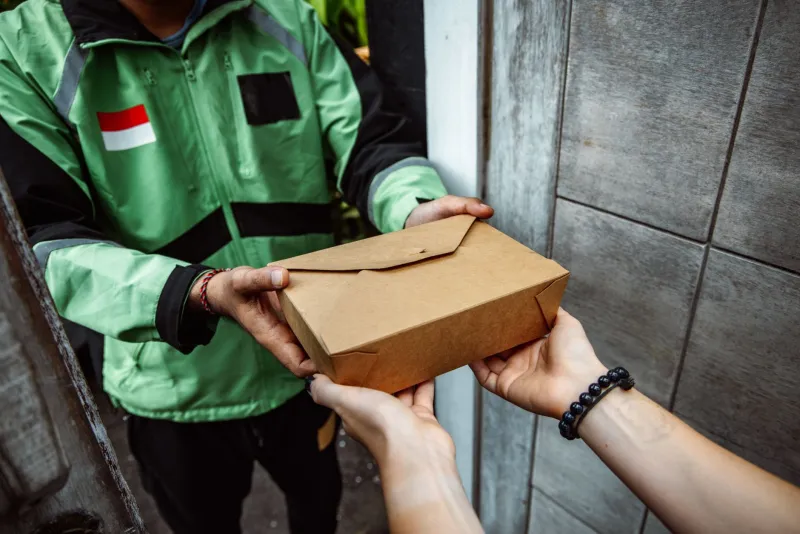
The next time you open a delivery bag and take that first bite of something that stops you mid-reach for your fork — something that tastes like it was made by someone who actually cared — there's probably a reason for that. Someone, somewhere down the line, cared enough to remember.