Real Deal or Red Flag? A No-Nonsense Guide to Spotting Authentic Italian Food When You Order Delivery
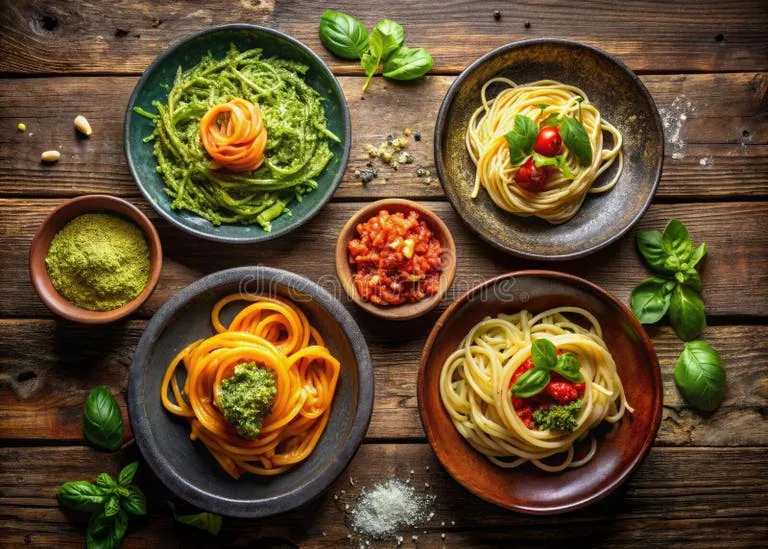
Photo: Italian pasta delivery food authentic homemade close up, via thumbs.dreamstime.com
You've had a long day. You want Italian food delivered. You pull up a menu, and suddenly you're faced with a list of dishes that all sound vaguely Italian but could range anywhere from something a Florentine nonna would recognize to a cheese-smothered creation that would make her genuinely concerned.
The difference matters — especially if what you're actually craving is the real thing.
Here's how to read between the lines of a delivery menu and figure out whether you're ordering authentic Italian food or a well-marketed imitation.
Start With the Sauce — It Tells You Everything
Nothing reveals a restaurant's Italian credibility faster than how it handles its sauces. Authentic Italian cooking tends toward restraint. A proper pomodoro is made with good tomatoes, olive oil, a little garlic, and maybe some basil. It doesn't need much else because the goal is to highlight the ingredients, not bury them.
If a menu is heavy on dishes described with phrases like "creamy Alfredo," "rich cream sauce," or "smothered in cheese," that's a signal worth noting. Here's a little-known fact: Fettuccine Alfredo as Americans know it — the heavy, cream-based version — is largely an American invention. The original Roman dish is made with just butter and Parmigiano-Reggiano. No cream. Similarly, carbonara is eggs, guanciale, Pecorino Romano, and black pepper. If a menu's carbonara description mentions cream, that's a red flag.
This doesn't mean cream has no place in Italian cooking — it does, in specific regional dishes. But a menu where cream appears constantly is usually one that's been calibrated for American tastes rather than Italian tradition.
Portion Size: More Is Not Always More
American restaurants, in general, have trained us to equate value with volume. Italian cuisine operates on a completely different logic.
A traditional Italian meal is built around balance and progression — antipasto, primo, secondo, contorno, dolce. Each course is intentionally sized so you can eat through all of them without feeling like you need to lie down afterward. When an Italian restaurant starts offering pasta dishes in portions that could feed a small family as a single entrée, it's usually a sign that the kitchen is more focused on satisfying American appetite expectations than on serving food the way it was meant to be eaten.
Smaller, thoughtfully portioned dishes that actually taste like something — rather than massive plates where the sheer quantity overwhelms any nuance — are often a better indicator of authenticity.
Read the Menu Like a Map
Authentic Italian restaurants tend to have menus that reflect regional specificity. Italy is a country of dramatically different food cultures — what they eat in Bologna bears little resemblance to what's on the table in Sicily or Venice. A menu that's trying to represent all of these simultaneously, while also offering chicken parmigiana, mozzarella sticks, and a "house special" pasta with eight different proteins, is probably not operating from a place of regional integrity.
Look for menus that show a point of view. If a restaurant is rooted in Southern Italian cooking, you might see more tomato-forward dishes, eggplant, seafood, and ricotta. A Northern Italian influence shows up in risotto, polenta, braised meats, and butter-based preparations. Regional coherence is a good sign. A little bit of everything, with no apparent logic, usually isn't.
Also pay attention to ingredient specificity. "Parmesan" is a generic term that could mean almost anything. "Parmigiano-Reggiano" tells you the kitchen cares about using the actual product. Same with "prosciutto di Parma" versus just "ham," or "San Marzano tomatoes" versus "marinara sauce." The details matter, and restaurants that source authentic ingredients tend to say so.
Questions Worth Asking Before You Order
If you're ordering from a new restaurant and want to get a sense of what you're actually getting, a quick phone call or message can tell you a lot. A few things worth asking:
- Is the pasta made fresh or dried? Both are legitimate, but fresh pasta for certain dishes and high-quality dried pasta (like De Cecco or Rummo) for others are markers of a kitchen that takes the basics seriously.
- Where does your mozzarella come from? Fresh mozzarella, ideally fior di latte or buffalo mozzarella, is very different from the low-moisture block cheese that gets shredded onto most American pizzas.
- What's in your carbonara? If the answer involves cream, you know what you're dealing with.
A restaurant that's proud of its sourcing and technique will answer these questions enthusiastically. One that hedges or gets defensive probably has something to hedge about.
The Cheese Situation
American Italian food has a cheese problem — specifically, there's often too much of it, applied indiscriminately. In Italian cooking, cheese is used deliberately. Not every dish gets cheese. Seafood pasta, for instance, is almost never served with Parmesan in Italian tradition. If a menu is suggesting you top your linguine alle vongole with a mountain of grated cheese, that's a cultural tell.
This isn't about being precious. It's about flavor. Cheese can overwhelm the delicate brininess of clams, the clean acidity of a good tomato sauce, or the earthy depth of a truffle preparation. Authentic Italian cooking uses cheese where it makes sense and leaves it out where it doesn't.
Why This All Matters When You're Ordering Delivery
When you're eating in a restaurant, atmosphere and service can compensate a little for food that isn't quite right. Delivery strips all of that away. What arrives at your door is purely the food, and it has to stand on its own.
That's why finding restaurants that are genuinely doing it right — using real ingredients, respecting regional traditions, and cooking with actual knowledge rather than just familiarity — pays off so much more when you're ordering in. The difference between a properly made dish and an imitation is obvious when there's nothing else to distract you.
Ordering from a platform like Mangiamo Paramus, which focuses on local Italian restaurants with real culinary roots in the community, is a good starting point. But now you've also got the tools to read the menu yourself — and know exactly what you're getting before the first bite.