Your Pasta Isn't Just Italian—It's From Somewhere Specific, and That Changes Everything
Ask most Americans to describe Italian food and you'll get a pretty consistent list: pasta, pizza, meatballs, tiramisu. Maybe lasagna. Maybe chicken parm. It's comfort food. It's familiar. It's beloved.
But here's the thing—that list describes American Italian food more accurately than it describes Italy itself. The real Italian culinary tradition is so regionally diverse, so geographically specific, so proudly local that Italian chefs have been known to argue passionately about which city makes the definitive version of a dish that travels just thirty miles between towns.
That specificity isn't snobbery. It's history. And once you understand it, you'll never look at a plate of pasta quite the same way again.
Italy Is Not One Kitchen—It's Twenty
Italy wasn't even a unified country until 1861. Before that, it was a patchwork of kingdoms, city-states, and territories, each with its own language, culture, and—crucially—its own food traditions. Those identities didn't disappear when political borders were drawn. They survived in the kitchen.
Today, Italy has twenty distinct regions, and the culinary differences between them are dramatic. The food of Calabria (fiery, rustic, heavily influenced by poverty and preservation techniques) shares almost nothing with the food of Emilia-Romagna (rich, indulgent, built on butter, cream, and cured meats). Venetian cuisine reflects centuries of trade with the Middle East and Asia. Sardinian food is practically its own universe.
When an Italian says they're cooking something "from home," they don't mean Italy in the abstract. They mean a specific village, a specific grandmother, a specific set of techniques passed down across generations.
The South: Bold, Sun-Drenched, and Deeply Misunderstood
Most of what Americans think of as "Italian food" actually traces back to Southern Italy—specifically to the waves of immigrants who arrived in the United States from regions like Campania, Sicily, Calabria, and Basilicata between the 1880s and 1920s. They brought their food with them, adapted it to available ingredients, and created something new that became Italian-American cuisine.
But the source material is worth knowing.
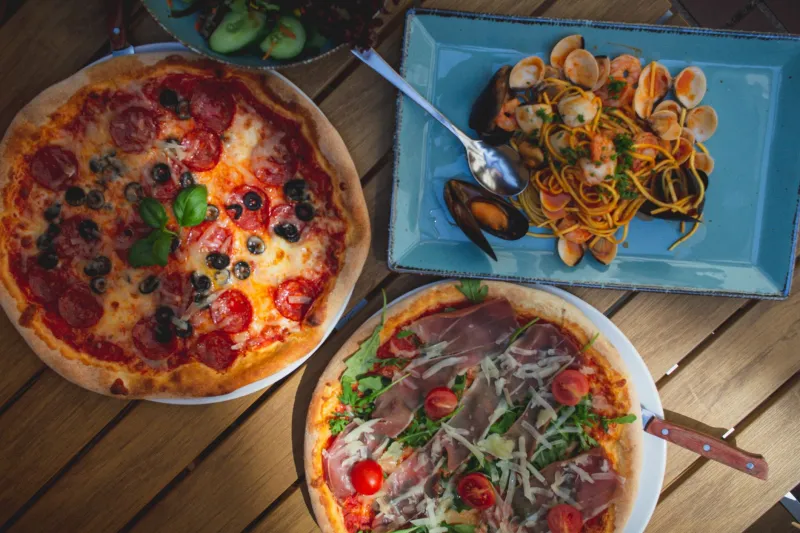
Naples and Campania gave the world pizza—specifically, the Neapolitan pizza, with its soft, charred crust, San Marzano tomatoes, and fresh fior di latte mozzarella. Neapolitan cooking is tomato-forward, olive-oil-based, and intensely flavored. Pasta dishes like spaghetti alle vongole (with clams) and ragù Napoletano (a slow-cooked meat sauce that bears little resemblance to what most Americans call meat sauce) come from this tradition.
Sicily is a world unto itself. The island's food reflects every civilization that ever occupied it—Arab, Greek, Norman, Spanish. You'll find sweet and sour flavors (agrodolce), almonds and raisins in savory dishes, abundant seafood, and a pastry tradition that includes the iconic cannoli. Sicilian cuisine is arguably the most complex and layered in all of Italy.
Calabria, the toe of Italy's boot, is known for its love of heat. The Calabrian chili ('nduja, a spicy spreadable salami, comes from here) and robust, preserved flavors define this region's food. It's peasant cooking at its most honest and satisfying.
The North: Butter, Cream, and a Different Definition of Pasta
Cross the invisible culinary line somewhere around Rome and the food transforms almost entirely. Olive oil gives way to butter. Tomatoes become less central. The pasta changes shape, texture, and even composition.
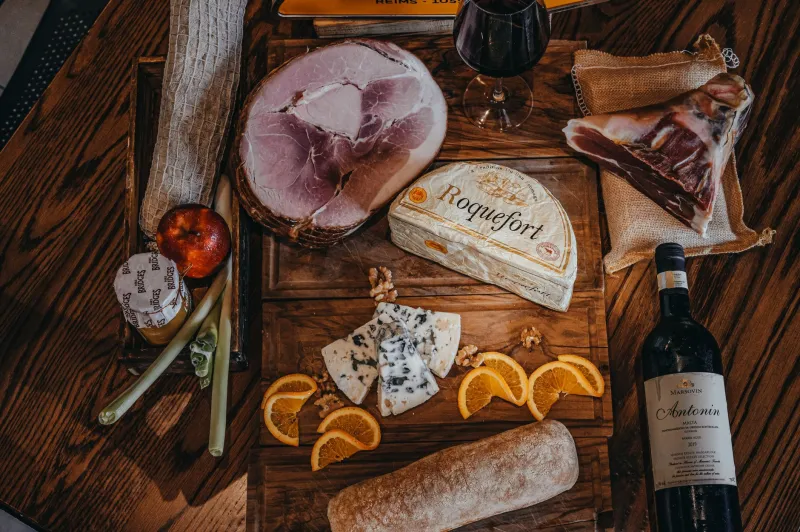
Emilia-Romagna, often called the food capital of Italy, is responsible for some of the country's most celebrated exports: Parmigiano-Reggiano cheese, Prosciutto di Parma, traditional balsamic vinegar from Modena, and fresh egg pasta—tagliatelle, tortellini, lasagne al forno. This is rich, generous, celebratory food. The ragù from Bologna (the original Bolognese) is slow-cooked, meat-heavy, and finished with milk or cream—not the quick tomato-and-beef sauce most Americans picture.
Lombardy, home to Milan, leans into risotto as its primary starch rather than pasta. Ossobuco (braised veal shank) served over saffron risotto Milanese is one of the region's defining dishes. The food here is refined, occasionally French-influenced, and built for cold winters.
Veneto brings together the influences of its lagoon city, Venice—seafood, polenta, and a cooking style shaped by centuries of maritime trade. Dishes like sarde in saor (sweet and sour sardines) and risi e bisi (rice and peas) reflect a culture that looked outward to the sea and beyond.
Tuscany: The Region Americans Think They Know
Tuscany has a special place in American culinary consciousness, partly because of its wine (Chianti, Brunello) and partly because of the Under the Tuscan Sun effect—a romanticized vision of rolling hills, stone farmhouses, and simple, beautiful food.
The reality is equally appealing, just more grounded. Tuscan cooking is famously minimalist. The ingredients are few, the techniques are straightforward, and the quality of the raw materials does the heavy lifting. Bistecca alla Fiorentina (a massive T-bone grilled over wood), ribollita (a hearty bread and vegetable soup), and pappardelle with wild boar ragù are pillars of this tradition.
Tuscany also has a proud tradition of legume-based dishes—so much so that Tuscans are sometimes called mangiafagioli (bean eaters) by other Italians. It's rustic, seasonal, and deeply satisfying.
Why Regional Authenticity Matters on Your Dinner Table
This isn't just culinary trivia. Understanding where a dish comes from changes how you experience it.
When you know that a proper carbonara uses only guanciale (cured pork cheek), Pecorino Romano, eggs, and black pepper—and that cream has absolutely no place in it—you understand why a version made with heavy cream tastes fundamentally different, even if it's good. When you know that Sicilian arancini are typically larger and more robustly filled than their Roman cousins, you appreciate the specific character of what you're eating.
At Mangiamo Paramus, regional authenticity isn't a marketing term—it's the standard. The recipes behind the menu draw from specific Italian traditions, not a blended, generic "Italian" template. That commitment means the flavors you're tasting have a story, a geography, and a lineage.
For New Jersey diners, that's a meaningful thing. This state has one of the most vibrant Italian-American communities in the country. Many families here have roots in specific Italian regions—Neapolitan grandmothers, Sicilian uncles, Calabrese cousins. Eating food that honors those specific traditions isn't just delicious. It's a kind of connection.
The Takeaway: Ask Where Your Food Is From
Next time you order Italian—from Mangiamo Paramus or anywhere else—try asking a simple question: where does this dish come from? Not just Italy. Where in Italy?
The answer might surprise you. It will almost certainly make the meal more interesting. And it might just send you down a rabbit hole of culinary history that makes every future plate of pasta feel like a small act of cultural discovery.
That's the gift of regional Italian cooking. It's not just food. It's a map of a place, a time, and a people—served warm, right to your door.