Old Hands, New Screens: How Paramus Italian Chefs Are Keeping Traditional Techniques Alive
There's a particular sound in a serious Italian kitchen on a Sunday morning. It's the low, rhythmic thud of a wooden rolling pin moving across a floured board, the hiss of soffritto hitting a hot pan, the patient bubble of a sauce that's been on the stove since before most people have had their first coffee. It's a sound that belongs to another century — and yet it's happening right now in kitchens across Paramus, New Jersey.
The question worth asking is: how?
In an era when food delivery platforms, digital menus, and algorithm-optimized ordering have reshaped how restaurants operate, the commitment to slow, labor-intensive, genuinely traditional Italian cooking feels almost countercultural. But for many of the family-run spots that have defined Paramus's Italian food scene for decades, it's simply non-negotiable.
The Technique Comes First — Everything Else Follows
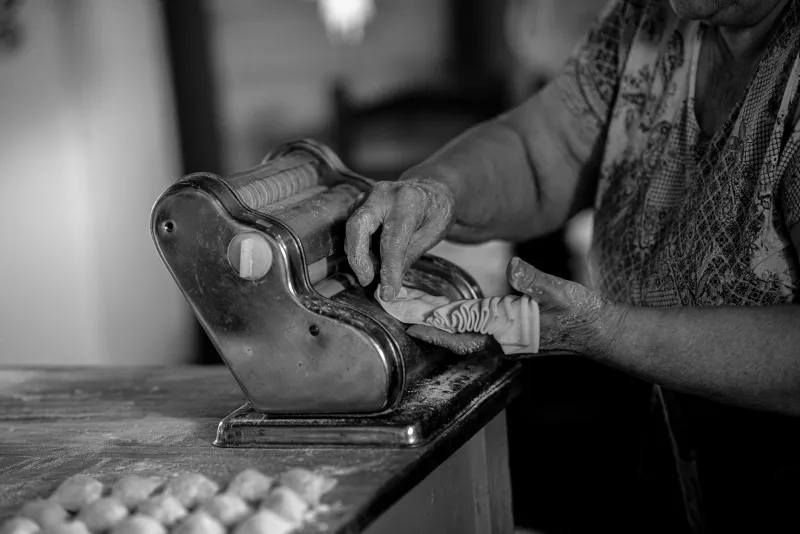
Walk into the back of almost any serious Italian restaurant in Paramus and you'll see evidence of a cooking philosophy that hasn't changed much since nonna ran the kitchen. Fresh pasta is still rolled by hand or through a hand-cranked machine. Stocks are made from scratch. Sauces — the real ones, the kind that give a dish its soul — are built low and slow over hours, not minutes.
For many restaurant owners, this isn't a marketing choice. It's a deeply personal one.
"My mother taught me that a ragù needs time to become what it's supposed to be," says one longtime Paramus restaurateur whose family has been cooking in Bergen County for three generations. "You can't rush it. You can't fake it. The moment you start cutting corners on the technique, you've lost the whole point."
That philosophy creates real operational challenges in a world where delivery demand and online ordering have compressed restaurant timelines and raised customer expectations for speed. But rather than compromise on process, many Paramus kitchens have adapted their systems around their techniques — not the other way around.
What "Handmade" Actually Means Behind the Line
The word handmade gets thrown around a lot in restaurant marketing, to the point where it's almost lost meaning. But in kitchens where it's genuinely true, you can taste the difference — and more importantly, you can see the difference in how the kitchen is organized.
Hand-rolled pasta, for instance, requires a fundamentally different prep schedule than dried pasta from a box. Dough needs to rest. Sheets need to be cut and shaped at the right moment. The whole process takes skilled hands and careful timing. In a busy delivery-focused operation, that means pasta prep starts early — often before the restaurant opens — so that by the time orders start coming in, the pasta is ready to cook to order.
Similarly, wood-fired ovens — which several Paramus Italian spots still use for pizza and certain roasted dishes — require a level of attention that gas ovens simply don't. You can't set a wood fire to 425°F and walk away. The cook has to read the heat, manage the fire, and rotate dishes based on feel and experience rather than a timer. It's slower. It's harder to teach. And it produces results that are genuinely different from what a conventional oven delivers — a slightly smoky, charred-edge quality that you just can't replicate any other way.
Bridging the Analog and the Digital
Here's where things get interesting. These same chefs who are hand-rolling pasta at 8 AM are also managing their menus on digital platforms, responding to online reviews, and thinking carefully about how their food travels in a delivery bag.
The transition hasn't always been easy. Multigenerational restaurant families describe a learning curve around digital ordering systems, delivery logistics, and the particular challenge of presenting food that was designed to be eaten in a dining room to customers who are picking it up at home.
"The food doesn't change," explains one chef whose family opened their Paramus location in the early 1990s. "What we had to figure out was how to make sure the food arrives in a way that respects what went into making it. That meant changing some of our packaging, adjusting portion sizes for certain dishes, and being honest with ourselves about what travels well and what doesn't."
Some traditional dishes simply aren't offered for delivery. Certain handmade pastas with delicate, light sauces are kept as dine-in only — not because the restaurant doesn't want to sell them, but because the chef refuses to let a dish go out the door if it's not going to arrive the way it was intended. That kind of restraint is rare, and it's a sign of a kitchen that cares more about the food than the revenue.
What to Look For When You Order
If you want to make sure you're getting genuinely traditional preparation when you order from a Paramus Italian restaurant, there are a few signals worth paying attention to.
Daily specials are a good sign. Restaurants that change their menu based on what's fresh and available are kitchens that are actually cooking, not just assembling. A printed special that changes throughout the week suggests a chef who's engaged with the process.
Look for regional specificity. A menu that identifies dishes by their Italian region of origin — Sicilian caponata, Neapolitan-style pizza, a Roman-influenced carbonara — is a menu written by someone who knows their culinary history. Generic "Italian" menus with no geographic anchoring often signal a broader, less traditional approach.
Longer prep times can be a compliment. If a restaurant tells you that a certain dish takes 20 to 25 minutes, that's often because something is actually being cooked to order rather than pulled from a steam tray. Be patient. It's worth it.
Ask about the pasta. Restaurants that make their pasta fresh will usually say so prominently — and they should. If a menu says "fresh pasta" without specifying, it's totally reasonable to ask whether it's made in-house or sourced.
The Thread That Connects
What's striking about the Italian restaurant owners and chefs in Paramus who are holding onto these traditional methods isn't stubbornness. It's clarity. They know exactly why they do what they do, and they can articulate it in terms that go beyond nostalgia.
They're not preserving technique for its own sake. They're preserving the outcome — food that tastes like it came from a real kitchen, made by people who learned from someone who learned from someone else, all the way back to a village in Campania or Calabria or Emilia-Romagna.
The digital ordering screen is just the newest layer on top of something very old. And if you know what to look for, you can still taste all of it.