No Judgment, No Jacket Required: Why Eating Italian at Home Just Hits Different

Somewhere between the third bite of braised short rib ragu and the moment you realize you're eating it in yesterday's gym clothes, something clicks. The food tastes better. Not marginally better — genuinely, inexplicably, embarrassingly better than the same dish you ordered at that place in the city with the exposed brick and the server who described the pasta as "a love letter to Emilia-Romagna."
Paramus knows this. It has always known this.
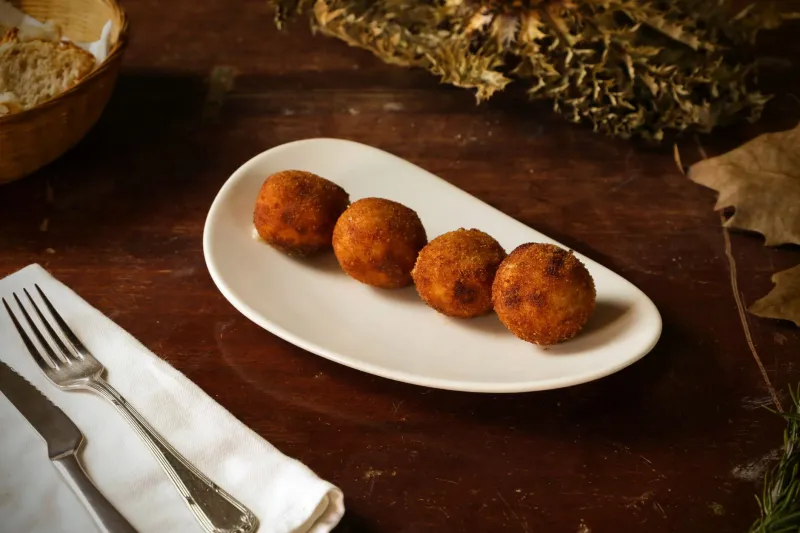
This is a town where the most beloved Italian spots sit behind strip mall parking lots, where the dining room might have laminate tables and a framed photo of the Amalfi Coast that's been hanging since 2003. And yet, somehow, the food coming out of those kitchens ends up in your living room and turns an ordinary Tuesday into something worth remembering. That's not an accident. That's the whole point.
The Performance Problem with Fancy Dining
When you walk into a high-end restaurant, you're not just ordering food. You're agreeing to a kind of performance — one where you're expected to dress appropriately, speak at a reasonable volume, photograph your appetizer before touching it, and nod thoughtfully when the server explains the provenance of the olive oil. It's a lot of work for what should be a pretty simple human act: eating something delicious.
Psychologists who study dining behavior have a term for this: social facilitation anxiety. When people feel observed or evaluated, their focus shifts. You stop tasting and start presenting — to your date, to the table next to you, to your own Instagram followers. The food becomes a prop in a scene you're directing rather than the entire reason you showed up.
Strip that away — swap the reservation for an app, the valet for your own driveway, the starched napkin for a roll of paper towels — and something genuinely interesting happens. You just eat. And eating, it turns out, is when Italian food does its best work.
What Paramus Chefs Already Understand
Talk to the people running Italian kitchens in Paramus for more than five minutes and this idea comes up, almost without prompting. There's a quiet pride in knowing that their food is landing on kitchen tables and coffee tables and folding trays in front of the TV — not as a lesser version of the restaurant experience, but as the version they actually intended.
"When somebody orders our Sunday gravy for a family dinner at home, that's the whole picture," says one local chef who's been cooking in Bergen County for over two decades. "The sauce, the people around the table, the fact that nobody's worried about how they look or how long they're taking. That's what the food was made for."
It's a philosophy rooted in Italian culinary tradition itself. The most iconic dishes in the Italian canon — ribollita, pasta e fagioli, braciole, polenta with slow-cooked ragù — were never designed for restaurant dining rooms. They were designed for long Sunday afternoons, for feeding a crowd without fuss, for the kind of eating where you go back for seconds before you've finished your first plate and nobody bats an eye.
Paramus, with its dense Italian-American heritage and its deeply domestic dining culture, has held onto that truth longer than most places.
The Science of Eating Without an Audience
Here's the thing research actually backs up: people report higher satisfaction with food when they eat in relaxed, low-pressure environments. It's not just about comfort — it's about attention. When you're not managing your social presentation, your brain has more bandwidth to actually process what you're tasting. The fat content in a properly made Bolognese, the way good pasta holds sauce differently than cheap pasta, the moment when braised meat gives up the last of its resistance — you catch all of that when you're not simultaneously worrying about whether your posture looks weird.
There's also something to be said for the container. Eating a bowl of cacio e pepe at your own kitchen table, maybe with a glass of whatever wine you had open, with the specific soundtrack of your specific household in the background — that's a sensory experience that a restaurant can't replicate. It's yours. The food doesn't have to compete with ambient music, other tables, or the theater of the open kitchen. It just gets to be what it is.
The Strip Mall Doesn't Lie
Paramus has a reputation for unfussy dining, and some people from the outside treat that like an insult. The parking lots, the strip malls, the absence of a sommelier — these get read as signs of a lesser food culture. But regulars here see it completely differently.
The absence of pretension isn't a bug. It's the whole feature.
When a restaurant isn't spending its energy on concept, atmosphere, and aesthetic curation, that energy goes somewhere. In Paramus, it tends to go into the food. Into sourcing decent ingredients. Into keeping recipes consistent. Into making sure the eggplant parmigiana you order on a Wednesday is the same eggplant parmigiana you got last month and the month before that. That kind of reliability doesn't photograph well, but it tastes like trust — and trust, in food, is everything.
The delivery model only deepens this. When you order from one of these kitchens and the food shows up at your door, you're not getting a performance. You're getting the kitchen's actual output, packaged and handed to you straight. The food has to stand on its own. No ambiance to compensate, no mood lighting to flatter the presentation. Just the dish, doing its job.
Regulars Get It
Spend any time talking to people who order regularly from Paramus Italian restaurants and you start to hear the same thing in different words. There's a woman in Woodcliff Lake who orders the same baked ziti every Friday night, eats it watching whatever her family has put on TV, and calls it the best part of her week. There's a guy in River Edge who hosts a monthly "Italian night" for his college friends — no theme, no effort, just a few orders from the same spot they've been using for years, eaten standing around his kitchen island.
Neither of them is thinking about the dining experience. They're just eating good food with people they like, in a place where nobody's watching. And according to both of them, it never gets old.
The Takeaway
Paramus Italian food doesn't need you to dress up for it. It doesn't need a reservation, a reason, or a moment worth documenting. It needs a fork, maybe a piece of bread, and about thirty seconds of patience while you find somewhere comfortable to sit.
The paradox — if you want to call it that — is that removing all the ceremony doesn't diminish the experience. It frees it. The food gets to be fully itself, and so do you. And somewhere in that mutual freedom, a Tuesday-night takeout order becomes the kind of meal you actually remember.
That's not a small thing. In fact, it might be the whole thing.