Faster Isn't Better: What Paramus Italian Restaurants Know About Delivery That the Big Apps Don't
There's a number glowing on your phone right now. Maybe it says 28 minutes. Maybe 32. Either way, it's been engineered to make you feel good — reassured, even — before you've placed a single order. The problem is that number has almost nothing to do with whether your food is going to taste the way it's supposed to.
This is the quiet tension sitting at the heart of Italian food delivery in Paramus, and it's one that the best local kitchens have been wrestling with for years. On one side: apps and platforms that compete almost entirely on speed promises. On the other: restaurants where a properly built bolognese takes as long as it takes, and nobody's going to apologize for that.
Spoiler — the restaurants are right.
Where the 30-Minute Promise Comes From
The aggressive delivery window didn't start in the restaurant industry. It migrated over from e-commerce, where same-day shipping became a baseline expectation and every logistics company scrambled to out-promise the last one. Food delivery platforms borrowed that psychology wholesale, betting that a bold time estimate would convert hesitant browsers into confirmed orders.
And it works — for the platform. The restaurant is a different story.
When a kitchen gets flagged by an app's algorithm for slow fulfillment times, the pressure to speed up is real. That means dishes get plated before they're fully rested. Pasta gets pulled from the water a minute early. Sauces that should simmer down another ten minutes get ladled up as-is. None of these shortcuts are dramatic enough to make the food inedible, but all of them together add up to something that's noticeably less than what the dish could have been.
In a cuisine like Italian, where technique and timing are genuinely inseparable, those shortcuts matter more than they would almost anywhere else.
What Actually Happens to Italian Food When It Moves Too Fast
Let's get specific, because this isn't abstract.
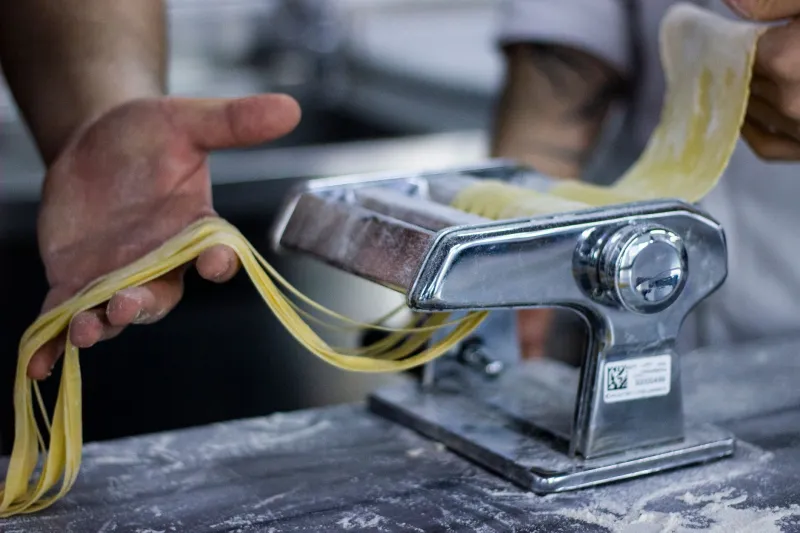
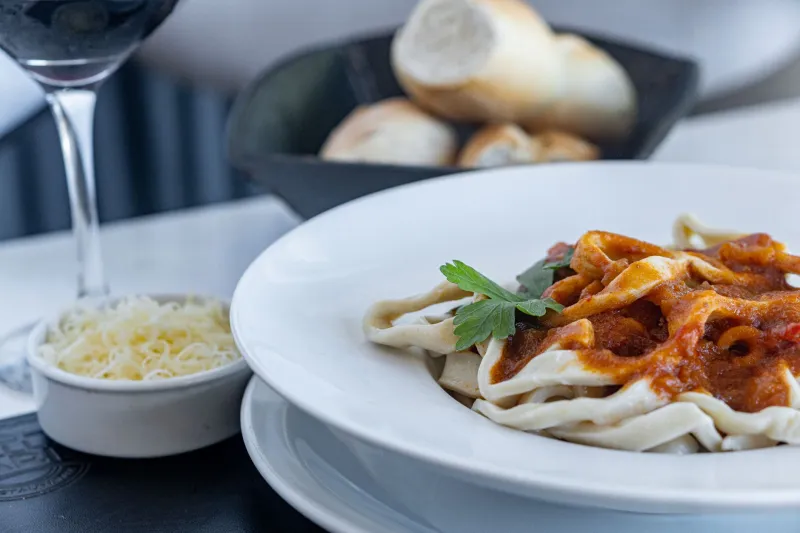
Fresh pasta has a narrow window between undercooked and overcooked that's measured in seconds, not minutes. If a kitchen rushes it to meet a delivery estimate, and then the dish sits in a container for 20 minutes in transit, you're eating something that was never right to begin with. A properly cooked piece of fresh pasta that gets packaged at the right moment, on the other hand, arrives in a state that's still recognizable as the real thing.
Braises — short ribs, osso buco, braised chicken — need time to rest after cooking. That resting period isn't optional. It's when the proteins relax and the liquid redistributes through the meat. Rush a braise from the pot to the container to the driver, and you've technically delivered a braise. But the texture will be off in ways that are hard to name and impossible to ignore.
Even something as simple as a wood-fired pizza needs a moment before it goes in the box. Trap steam too early and the crust softens in exactly the ways you didn't want it to. A kitchen that knows what it's doing will hold for just a beat — which looks like slowness from the outside but is actually precision.
Paramus Kitchens That Refuse to Play the Speed Game
Here's what's interesting about the Italian restaurant landscape in Paramus specifically: a lot of the best spots are family-run operations that have been doing this long enough to have a clear sense of what they will and won't compromise on. They didn't build their reputations by cutting corners, and they're not about to start because an app's dashboard is showing a yellow flag next to their average prep time.
These kitchens tend to be quieter about it. You won't see them posting manifestos about culinary integrity. But if you pay attention, you'll notice that when you order from certain Paramus restaurants, the estimated window is a little wider — maybe 40 minutes instead of 25. And when the food arrives, it's actually good. Consistently good. Not just good for delivery, but genuinely good.
That's not a coincidence. That's a kitchen that's refused to let a platform's marketing promise override what they know about their own food.
What You Can Actually Do With This Information
First, recalibrate your expectations around delivery time estimates. A 45-minute window from a kitchen you trust is almost always going to produce a better meal than a 20-minute window from somewhere optimizing for the leaderboard. Treat the estimate as a proxy for how much breathing room the kitchen is giving itself, not just how fast their drivers move.
Second, pay attention to what you're ordering. Dishes that are inherently more forgiving — a hearty ribollita, a well-constructed eggplant parm, a thick pasta with a meat ragu — hold up to transit better than delicate preparations. If you're ordering something that requires precision timing, like fresh pasta in a light butter sauce, you're asking more of the delivery format than it can reliably give you, regardless of how good the kitchen is.
Third, and maybe most practically: order a little earlier than you think you need to. The worst version of Italian delivery isn't slow food — it's food that was rushed because a hungry person placed an order 15 minutes before they actually needed to eat. Build in some margin. Let the kitchen do its thing.
The Bigger Picture
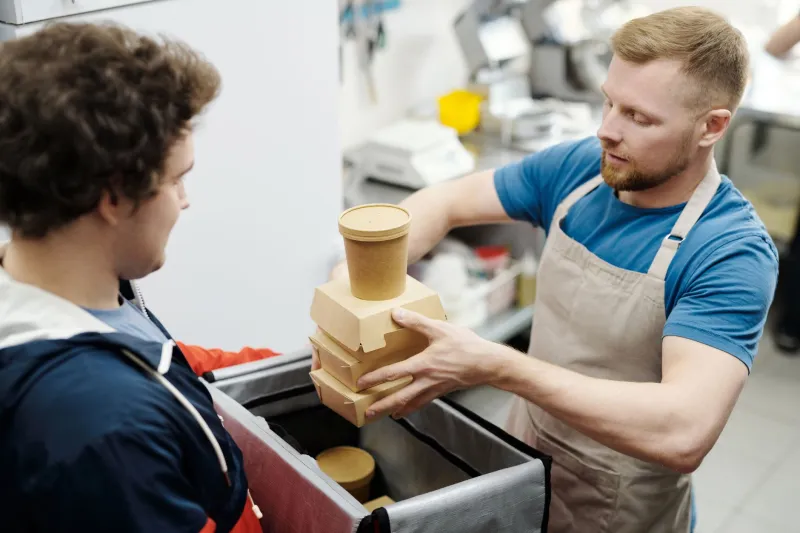
There's a version of food delivery that works beautifully with Italian cuisine. It's not the version built around shaving minutes off an estimate to improve a platform's conversion rate. It's the version where a kitchen that genuinely knows what it's doing packages food thoughtfully, a driver who understands the assignment gets it to you without unnecessary detours, and you open the container while it's still in the right temperature range.
Paramus has restaurants that operate this way. They exist because there's a customer base here — real people who've eaten enough mediocre delivery to know the difference — that's willing to wait an extra ten minutes for food that actually delivers on what Italian cooking is supposed to be.
The 30-minute promise sounds good. But dinner that tastes the way it's supposed to? That's better. Every time.