No Audience, No Problem: The Quiet Confidence Behind Paramus Italian Cooking
There's a specific type of restaurant that exists only in cities where someone important might walk through the door. You can feel it the moment you sit down — the composed towers of food, the server who describes each dish like a museum docent, the lighting carefully calibrated to make everything look like it belongs on a magazine cover. That restaurant is performing. And honestly? The performance is exhausting.
Paramus doesn't do that. It never really has.
What you get here instead is something harder to engineer and impossible to fake: food that was cooked because somebody actually wanted it to taste good. Not because a photographer was coming. Not because a critic had a reservation. Just because that's how it's supposed to be done.
What Happens When the Pressure Disappears
Take ego out of a kitchen and something interesting fills the space. Call it instinct. Call it muscle memory. Call it the accumulated knowledge of cooks who learned by watching their grandmothers rather than auditioning for cooking competitions. Whatever you call it, Paramus has a lot of it.
The absence of a serious food-critic culture in this part of Bergen County isn't a gap — it's a feature. When nobody's grading you on originality, you stop trying to be original for its own sake. You start cooking the bolognese the way bolognese is supposed to be cooked: low and slow, with patience, without shortcuts, because the people eating it will absolutely notice if you cut corners. Your regulars will notice. And in a town like Paramus, your regulars are everything.
That dynamic creates a feedback loop that fancy restaurants in status-conscious markets can't replicate. The chef isn't chasing a star. The chef is trying to make sure the family that orders every Friday night keeps ordering every Friday night. That's a very different motivation, and it produces very different food.
The Confidence of Not Caring Who's Watching
There's a counterintuitive thing that happens when you cook without an audience: you get better. Not worse — better. Because you stop making decisions based on how something looks and start making them based on how something tastes.
That's why the sauce at a lot of Paramus Italian spots is a little darker than you'd expect. Why the portions are a little more generous. Why the bread arrives without ceremony but somehow always seems to be exactly what you needed. These aren't accidents. They're the result of cooks who've made the same dishes hundreds of times and have optimized entirely for the eating experience rather than the Instagram moment.
Presentation matters to a point — nobody wants their food to look like it was assembled in the dark — but in Paramus kitchens, it's clearly not the priority. The priority is that when you open the container or sit down at the table, the smell hits you first, and the taste confirms everything the smell promised. That's a very Italian way of thinking about food, actually. It's also just common sense.
Why Low-Key Atmospheres Produce High-Key Flavor
Walk into most of the Italian spots around Paramus and you'll notice what's missing before you notice what's there. No elaborate tasting menus. No chef's table with a view of the open kitchen. No six-syllable descriptions of where the olive oil was pressed. Just good food, made by people who know how to make it, served to people who came specifically because they know it's going to be good.
That simplicity is doing a lot of work. It's telling you something about the priorities of the place. It's saying: we're not here to impress you with the concept. We're here to feed you well. And if we do that consistently, you'll be back. That's the whole business model, and it's remarkably effective.
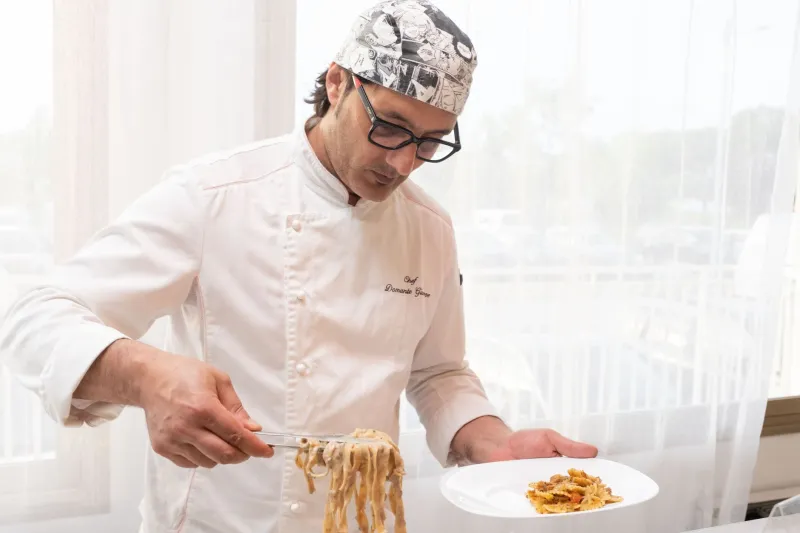
The low-pressure atmosphere also gives cooks the freedom to be instinctive. In high-stakes restaurant environments, everything gets locked down — recipes are standardized, plating is rehearsed, any deviation from the approved version is a problem. In a Paramus kitchen where the chef has been making the same Sunday gravy for twenty-five years, there's room to adjust. A little more basil today. A longer simmer because the tomatoes needed it. That flexibility is how great cooking actually works, and it's hard to maintain when you're performing for an audience.
The Delivery Angle Changes Everything
Here's where it gets really interesting for anyone ordering through a platform like Mangiamo: the food coming out of these kitchens was never designed to be looked at. It was designed to be eaten. And that's a meaningful distinction when you're talking about delivery.
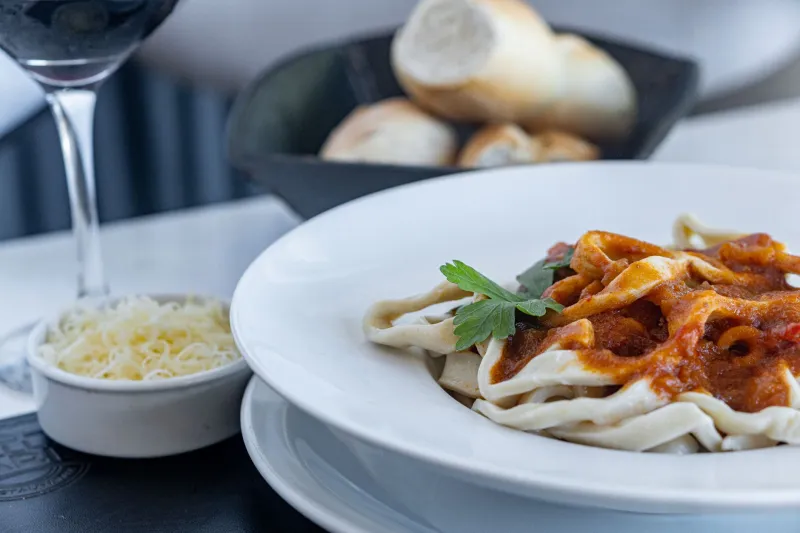
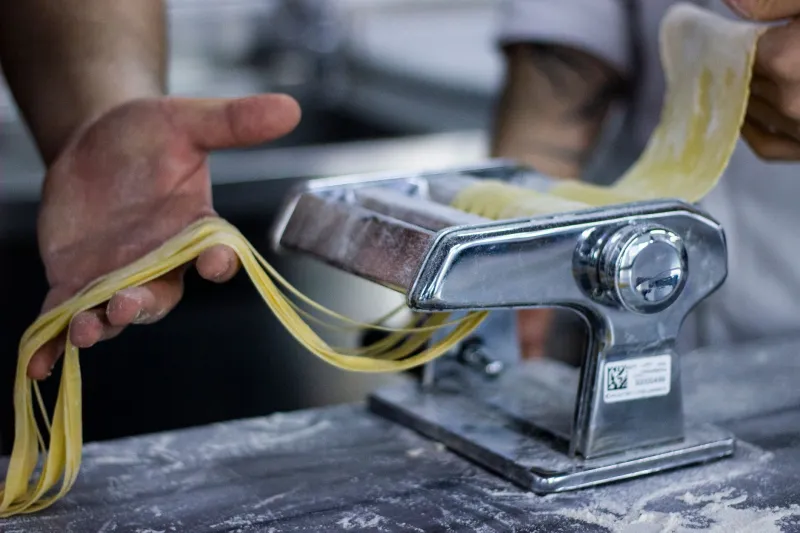
A lot of restaurant food — especially in trend-driven markets — doesn't survive the trip from kitchen to table particularly well, because it was engineered for a specific presentation moment that evaporates the second someone puts a lid on the container. Paramus Italian food, built around flavor and substance rather than visual drama, travels differently. The braised short rib doesn't need to be plated just so. The eggplant parm doesn't lose anything in transit. The pasta, made properly and sauced generously, arrives tasting like it was meant to arrive exactly like this.
That's not a coincidence. It's the natural result of cooking that prioritized the right things from the start.
What Confidence Actually Looks Like in a Kitchen
People sometimes mistake Paramus's lack of culinary showmanship for a lack of ambition. That's exactly backwards. It takes a particular kind of confidence to serve a plate of pasta that looks completely unassuming and trust that the flavor will do all the talking. It takes confidence to not explain yourself. To not add a foam or a drizzle or a garnish that signals effort. To just put the food down and let it be what it is.
That's what's happening in these kitchens. Not a lack of trying — a refusal to try in the wrong direction. The ambition is entirely pointed at the food itself, which is where it belongs.
So the next time your order arrives and it looks, well, like food — no architectural plating, no edible flowers, no sauce artfully smeared across the container lid — take that as a good sign. It means the people who made it weren't distracted by anything other than making it taste exactly right. In Paramus, that's not settling. That's the whole point.