Sweatpants and Sunday Gravy: Why the Best Italian Meal You'll Ever Have Requires Zero Effort to Look Nice
Let's be honest about something. You've had a bowl of pasta in a dimly lit Manhattan restaurant where the chairs were beautiful and deeply uncomfortable, the server recited a seven-item specials list at warp speed, and the bill arrived looking like a mortgage payment. And it was fine. Maybe even good. But it wasn't that good.
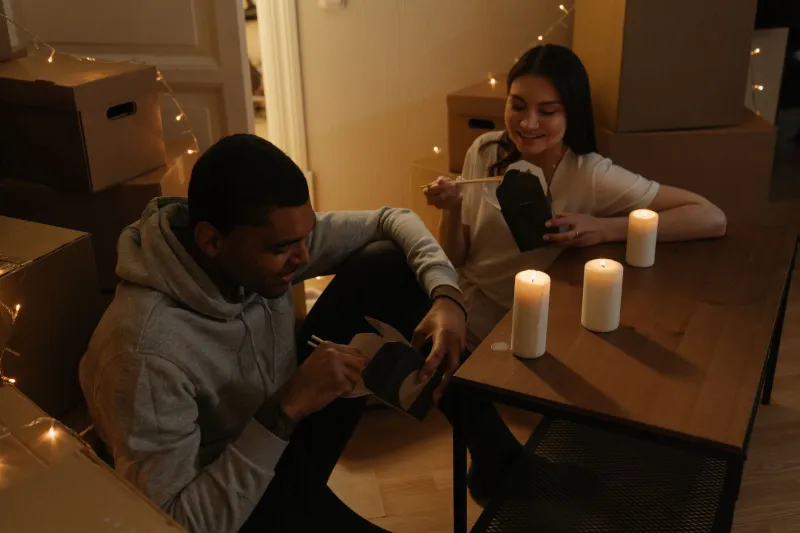
Then you've ordered from your go-to Italian spot in Paramus on a Tuesday night, eaten it straight from the container on your couch in clothes you definitely wouldn't post on Instagram, and thought: this is one of the best things I've ever eaten.
That's not a coincidence. That's psychology doing something genuinely interesting at the dinner table.
The Pressure Problem Nobody Talks About
When you dress up for dinner, you're not just changing clothes. You're shifting into a different mental mode. You're performing. You're evaluating. You're aware of how you're sitting, what you're ordering, whether you're making the right choice on the wine list. That low-level cognitive hum is constant, and it costs you something—specifically, the ability to just be present with what's on the plate in front of you.
Food psychologists have a name for this. Attentional focus, or more specifically, the lack of it. When your brain is busy managing social presentation, it has fewer resources left over for the sensory experience of eating. You're tasting with about sixty percent of your capacity. The other forty is wondering if you're pronouncing gnocchi right.
Suburban Italian restaurants—the kind that Paramus does exceptionally well—remove that friction almost entirely. There's no maître d' making a quiet judgment about your outfit. There's no table next to yours where someone is clearly on a very important business dinner. There's no ambient pressure to spend more, stay longer, or signal that you belong there. You just... eat.
What Regulars Actually Say
Ask anyone who orders from the same Paramus Italian spot week after week, and a pattern emerges fast. It's not that they think the food is technically superior to every restaurant they've ever visited. It's that eating it feels right in a way that's hard to articulate but impossible to ignore.
"I don't think about it," one Bergen County regular put it. "I just eat. And then I realize I'm happy."
That might sound simple, but it's actually the whole ballgame. Happiness at the table—real happiness, not the performed kind—requires a certain absence of self-consciousness. It requires permission to reach across for bread, to get sauce on your sleeve, to take the last piece without asking twice. Paramus Italian, whether you're eating in or getting it delivered to your door, gives you that permission by default.
Restaurant owners in the area tend to notice this too. The vibe at a family-run Italian spot in Paramus isn't manufactured. It's just what happens when the people running the place care more about the food than the atmosphere design. Tables are close together not because someone made a calculated decision about intimacy, but because the space is what it is. The lighting is what it is. And somehow, that honesty makes everything taste more genuine.
Authenticity Isn't Plated, It's Felt
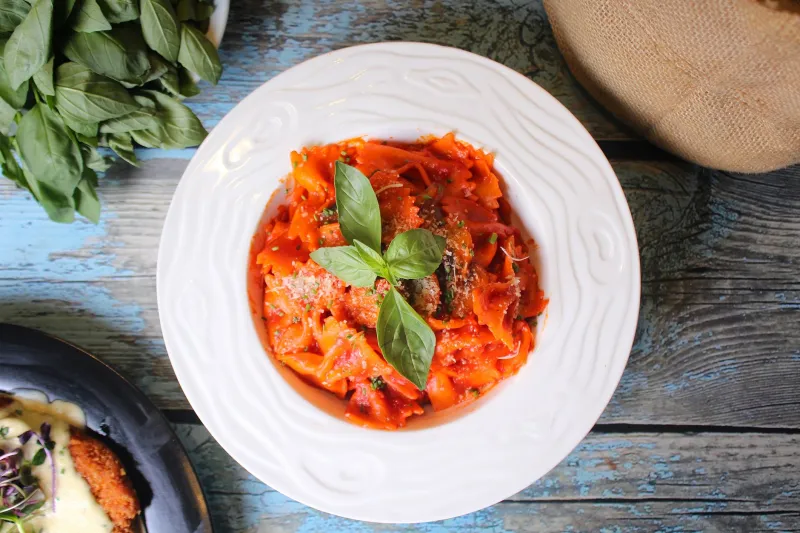
Here's something worth sitting with: the most authentic Italian food traditions were never meant to be fancy. Sunday gravy started as a way to stretch cheap cuts of meat through a long, slow cook. Pasta e fagioli was peasant food. Braciole, arancini, baked ziti—these dishes have working-class roots. They were built for feeding families, not impressing critics.
When you eat them in an environment that matches that spirit—casual, warm, unpretentious—something clicks. The context reinforces the content. The food makes more sense. It tastes like what it actually is, which is comfort made edible.
This is part of why Italian food, specifically, tends to suffer most in overly formal settings. French cuisine has a long tradition of elaborate presentation that fits naturally into white-tablecloth environments. Italian cuisine has a long tradition of your grandmother refusing to sit down until everyone else has a full plate. Those are fundamentally different relationships with food, and the second one doesn't translate well to places where the server introduces themselves as your "dining guide for the evening."
The Delivery Dimension
Ordering Italian delivery in Paramus takes this whole dynamic one step further. Now you've eliminated the restaurant environment entirely. You're in your own space, with your own people, on your own schedule. The food arrives and you decide what it looks like on the table. You decide the music. You decide whether dinner is a production or just dinner.
And here's what tends to happen: it becomes a production anyway, just an honest one. Someone sets out the good plates. Someone opens a bottle. The kids actually sit down. The conversation goes longer than expected. Nobody's checking the time because nobody has a reservation somewhere else afterward.
This is the Paramus paradox in its purest form. Remove the trappings designed to make a meal feel special, and the meal often becomes more special. The food does the work it was always supposed to do—it brings people together and makes them feel good—without needing a stage set to pull it off.
Why This Matters When You're Choosing Where to Order
Next time you're deciding between the place with the long waitlist in the city and your reliable Italian spot in Paramus, consider what you're actually optimizing for. If the answer is a story to tell at work about a difficult reservation, by all means, go for it.
But if the answer is a genuinely good meal—food that tastes like someone made it because they know how, eaten in a way that lets you actually enjoy it—then the calculus changes. The strip-mall kitchen that's been making the same braciole recipe for twenty years doesn't need a Michelin star to earn your loyalty. It just needs to keep being exactly what it is.
Comfort isn't a consolation prize. Sometimes it's the whole point.
And sometimes the best thing you can do for a great meal is get out of its way—wear something comfortable, order from somewhere that's been doing this forever, and just let the food be good.