Behind the Parking Lot: How Strip Mall Kitchens Became Paramus's Unlikely Italian Heartland
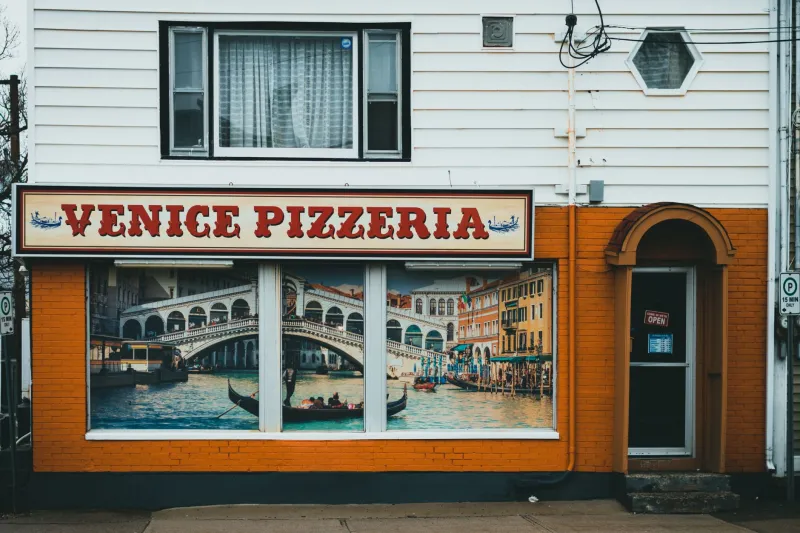
There's a moment every first-timer experiences when they pull into a Paramus shopping plaza, squint at the address on their phone, and think: this can't be right. The restaurant they've been told about — the one with the handmade pasta and the slow-braised short rib ragù that supposedly changes lives — is wedged between a nail salon and a picture framing shop. The signage is understated. The parking lot is shared with a dry cleaner.
And then they eat. And they get it immediately.
Paramus has a reputation that doesn't always make the food press, but locals know the truth: some of the most committed, ingredient-forward Italian cooking on the East Coast is being done inside spaces that would never make it onto a design blog. That's not a bug. That's very much the feature.
The Real Estate Equation Nobody Talks About
Here's a number worth sitting with: the average cost per square foot for restaurant space in Manhattan's West Village — long considered the spiritual home of New York's Italian dining scene — runs somewhere between $250 and $400 annually. In Paramus's commercial corridors, you're looking at a fraction of that.
That gap doesn't just affect a landlord's bottom line. It reshapes everything about what ends up on your plate.
When a chef or restaurateur isn't hemorrhaging money on rent, they have choices. They can spend more on San Marzano tomatoes instead of canned house-brand alternatives. They can bring in imported 00 flour rather than substituting a domestic blend. They can afford to let a braise go six hours instead of cutting it at four because labor costs aren't being squeezed by a lease that demands the dining room turn tables twice a night.
In short, lower overhead creates breathing room — and breathing room, in a kitchen, translates directly to better food.
Ambiance as a Distraction (and Why Paramus Skipped It)
There's a particular kind of Italian restaurant that thrives in major cities. You know the type: exposed brick, Edison bulbs, a chalkboard menu written in a font that took someone three hours to design, and a wait list that books out six weeks. The food is often good. Sometimes it's great. But you're also paying for the room, the concept, the Instagrammable moment.
Paramus, by contrast, never really had the luxury — or the pressure — to build that kind of theater. The strip mall setting doesn't lend itself to mood lighting and a $20 cover charge for bread service. So the restaurants that set up shop here made a different bet: put everything into the cooking and trust that diners would find them.
It's a philosophy that maps surprisingly well onto how Italians themselves think about food. In Italy, the trattoria with the plastic chairs and the handwritten paper menu is almost always the one worth going back to. The places that look fancy are often the ones coasting on appearance. Paramus, almost by accident, replicated that dynamic on American soil.
The Chefs Who Chose Substance Over Setting
Talk to the people actually running these kitchens and a pattern emerges. Many of them came up in higher-profile environments — catering operations, hotel restaurants, or spots in New York where the pressure to perform for critics and investors was constant. Paramus offered something different: a customer base that cared genuinely about the food, real estate that didn't require a Wall Street salary to sustain, and enough distance from the trend cycle to just cook.
The result is a kind of culinary authenticity that's hard to manufacture. When a kitchen isn't trying to be anything other than a kitchen, the cooking tends to reflect that clarity. Sauces get made from scratch. Pasta gets rolled by hand on slower days and by machine on busy ones — but it's still the chef's dough, not a bag from a food service distributor. Meatballs get seasoned the way someone's grandmother taught, not the way a corporate recipe card dictates.
For diners ordering through a platform like Mangiamo Paramus, this matters more than it might seem. What's in that takeout container represents real decisions made by real cooks who had the freedom to make them.
Why Delivery Actually Levels the Playing Field
Here's an irony worth appreciating: the rise of delivery and online ordering has done more to democratize access to these strip mall gems than any amount of food writing could. When you're ordering from your couch, the restaurant's exterior is completely irrelevant. You're not walking past and making a snap judgment based on the facade. You're reading the menu, maybe checking a few reviews, and deciding based entirely on what the kitchen promises to deliver.
That shift has been quietly transformative for Paramus's Italian restaurant scene. Places that might have struggled to draw foot traffic from passersby — because, let's be honest, a strip mall storefront doesn't exactly beg you to walk in — are now reaching diners across Bergen County who would never have stumbled across them otherwise.
The food is the introduction. The food is the pitch. And when the food is this good, the pitch works.
What You're Actually Getting When You Order Paramus Italian
It's worth being specific about what this all means at the practical level, especially for anyone new to ordering from the Paramus Italian restaurant scene.
You're probably getting a smaller, tighter menu than you'd find at a sprawling Italian-American chain. That's intentional — it means the kitchen is focused on doing fewer things exceptionally well rather than many things adequately. You might notice that portions lean generous without being gratuitous, because these aren't restaurants that need to charge you for the atmosphere. You're likely eating food that was prepped that day, because the volume and margins of a strip mall operation don't support sitting on inventory the way a large restaurant group might.
And if you pay attention, you'll probably taste the difference. Not in a precious, wine-pairing-notes kind of way. Just in the way that something made with care and good ingredients tastes better than something that wasn't.
The Paradox That Isn't Really a Paradox
Call it the Paramus paradox if you want — great Italian food hiding in unglamorous locations — but it stops feeling like a contradiction once you understand the logic behind it. The strip mall isn't an obstacle to quality. For these chefs and these restaurants, it's the condition that made quality possible.
No one is here to impress a Michelin inspector or court a reservation from a food influencer. They're here to cook. And somewhere between the shared parking lot and the nail salon next door, that's exactly what they're doing — really, really well.
Next time you're browsing Mangiamo Paramus and you notice an address that gives you pause, lean into it. Order the pasta. Get the braised thing. Trust the strip mall.
It knows what it's doing.