Hidden in Plain Sight: The Real Reason Paramus Italian Restaurants Never Show Up in Food Magazines
Here's a question worth sitting with: if a restaurant serves food that's arguably better than half the places celebrated in Bon Appétit or shortlisted for James Beard consideration, but nobody with a press badge ever walks through the door — does it matter?
For the people who actually eat there? Not even a little bit. The regulars who've been ordering from the same Paramus Italian spot for fifteen years aren't losing sleep over a lack of national recognition. But for anyone curious about how food culture actually gets shaped in this country, the invisibility of Paramus's best Italian restaurants is a genuinely fascinating story.
And it starts with geography.
The Manhattan Gravity Problem
Food journalism in America has a centering problem, and the center is almost always New York City. More specifically, it's Manhattan — with occasional field trips to Brooklyn when someone needs to write a piece about "authentic" anything. The logic is self-reinforcing: critics are based there, publications are headquartered there, and restaurant PR firms operate on the assumption that a review in a New York outlet is worth more than anything else.
Paramus sits about 15 miles northwest of Midtown. That's nothing by car — on a good day, you're talking 25 minutes on Route 17. But in food media terms, it might as well be another country. The invisible boundary between "the city" and "the suburbs" functions almost like a prestige filter. Cross it, and you've left the territory that food writers consider worth covering.
This isn't a new observation, but it's one that rarely gets applied specifically to Italian food — which is ironic, because the Italian-American community that shaped so much of New Jersey's culinary identity has deep, documented roots in places like Paramus, Hackensack, and the surrounding Bergen County towns. The cuisine here didn't arrive last year chasing a trend. It grew up here.
Why the Restaurants Themselves Don't Chase Coverage
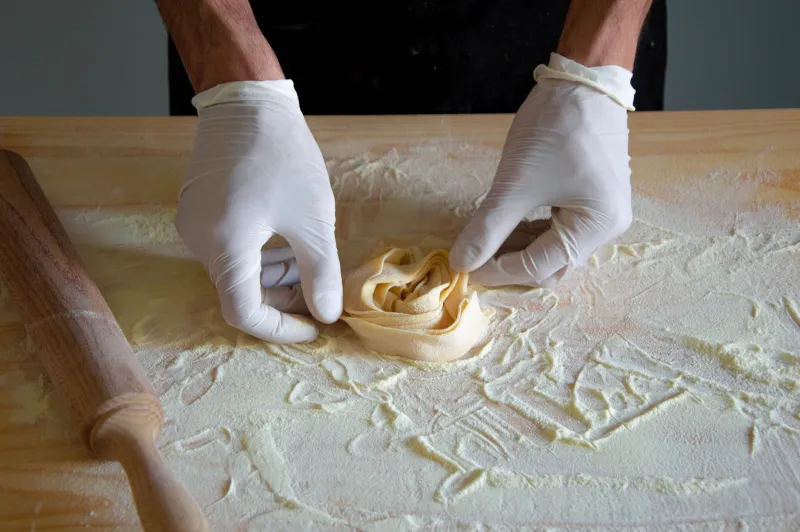
Here's where it gets interesting. Talk to the owners of the Italian restaurants in Paramus that locals actually love — the ones with the hand-rolled pasta, the Sunday gravy that's been simmering since before the lunch crowd arrives, the chicken marsala that somehow tastes like it was made specifically for you — and a lot of them will tell you the same thing: they're not interested in press.
That's not false modesty. It's a deliberate operating philosophy.
When a restaurant becomes a destination for out-of-towners chasing a write-up, a few things tend to happen. Reservation systems get overwhelmed. Regulars get squeezed out. Owners start making menu decisions based on what photographs well rather than what tastes best. The kitchen, which was cooking for a community, starts cooking for an audience.
The family-run Italian spots in Paramus have watched this happen to restaurants in other markets. They've seen places they respected get "discovered," spike in popularity, and quietly lose whatever made them worth discovering in the first place. Staying off the radar isn't just an accident — for many of these kitchens, it's the whole strategy.
What Food Media Actually Rewards
It's also worth being honest about what national food coverage tends to celebrate. There's a strong bias toward novelty. A new restaurant doing something unexpected with Italian ingredients — fermented this, deconstructed that, regional Italian technique filtered through a chef who trained in Copenhagen — will almost always get more column inches than a place doing traditional Italian cooking exceptionally well.
Paramus Italian restaurants, by and large, are not doing anything unexpected. They're doing the expected things with a level of care and consistency that's genuinely rare. That's not a story food media knows how to tell, or frankly, one it's very motivated to tell. "This place has been making the same braised short rib for 22 years and it's perfect every single time" doesn't generate the same clicks as "This chef is reimagining the Roman carbonara in ways that will change how you think about pasta."
Authenticity, in the truest sense, isn't photogenic. It's repetitive. It's a cook who's made the same dish thousands of times and knows, through pure muscle memory, exactly when to pull it off the heat. That knowledge doesn't translate into a compelling Instagram grid or a 1,500-word profile about culinary innovation.
The Delivery Dimension
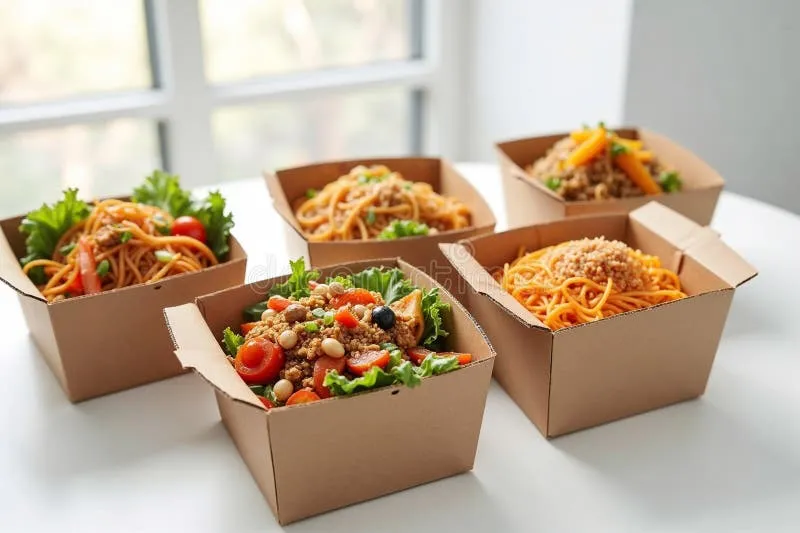
There's one more layer to this that's specific to how a lot of people in Paramus actually interact with these restaurants: takeout and delivery. A significant chunk of the meals that come out of the best Italian kitchens here never get eaten in a dining room at all. They get ordered online, packed carefully, and eaten at someone's kitchen table or in front of a movie.
Food criticism, almost by definition, is built around the dining room experience. The ambiance, the service, the plating, the whole theatrical production of eating out — that's what gets evaluated and described. A restaurant whose food travels beautifully, whose garlic knots arrive still pulling steam, whose veal piccata holds up on a 20-minute drive across Bergen County — that restaurant is doing something remarkable that the traditional review format has no good way to capture.
For the people ordering delivery in Paramus, though, it's the only metric that matters.
The Upside of Being Overlooked
None of this is meant to be a complaint. If anything, the argument runs the other direction: the anonymity of Paramus's best Italian restaurants is a feature, not a bug.
Because they're not cooking for critics, they're cooking for neighbors. Because they're not chasing awards, they're chasing consistency. Because they don't have a PR firm pitching their story, they don't have to maintain a story — they just have to make good food, reliably, for people who'll be back next week.
That's a different kind of pressure than the one that shapes restaurant culture in more visible markets, and it produces a different kind of result. Not flashier. Not more Instagram-friendly. Just better, in the ways that matter when you're actually hungry.
The food magazines will keep flying their writers to the next buzzy neighborhood in Brooklyn or the latest chef-driven tasting menu in Manhattan. Meanwhile, somewhere off Route 17, someone is pulling a tray of eggplant parmigiana out of the oven for the ten-thousandth time, and it's going to be exactly as good as it was the first time.
You just have to know where to order.