Good Things Take Time: The Case for Paramus Italian Restaurants That Refuse to Rush Your Dinner
There's a particular kind of impatience that food delivery apps have trained into all of us. You tap your order, watch a little animated car crawl across a map, and somewhere in the back of your brain a timer starts ticking. Thirty minutes feels reasonable. Forty-five feels like a test of character. An hour? You're already drafting a one-star review.
But spend any time talking to the people running Paramus's best Italian kitchens, and you start to realize that the clock isn't really their enemy — it's yours.
The Problem with the 30-Minute Promise
Chain delivery services built their entire brand around speed. Get it there fast, keep the customer happy, move on to the next order. It's a model that works fine if you're delivering a burger or a burrito — food that's essentially designed to travel. But Italian cooking, real Italian cooking, doesn't operate on that timeline.
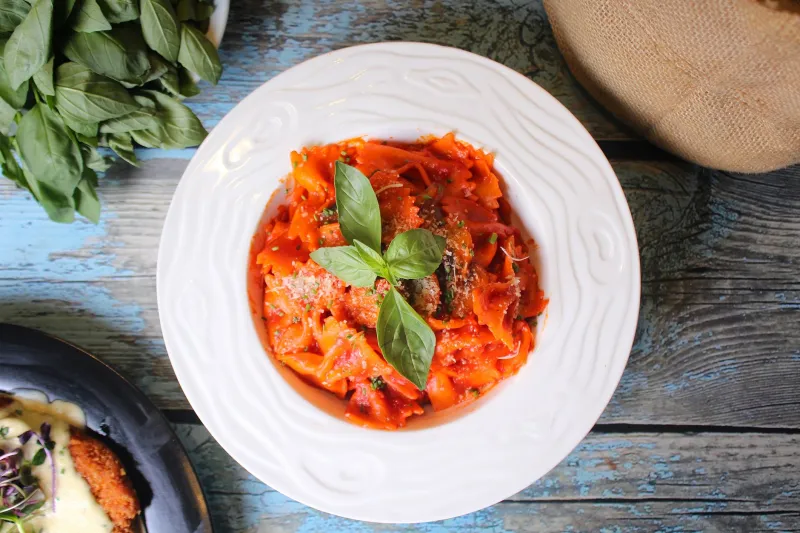
Think about what actually goes into a plate of chicken marsala or a proper baked ziti. There's reduction happening in that pan. There's timing involved in pulling pasta at exactly the right moment. There's a window — sometimes just a minute or two wide — where a dish is at its peak. Chain kitchens work around that problem by engineering food that's more or less the same whether it sits for ten minutes or forty. Independent Italian spots in Paramus don't have that option, because they're not making that kind of food.
"You can't rush a braise," says one owner who's been running his family's restaurant on a busy Route 17 corridor for over two decades. "I could get your order out in twenty minutes. But what you'd get isn't what we make. It's something that looks the same and tastes like nothing."
What's Actually Happening in That Kitchen
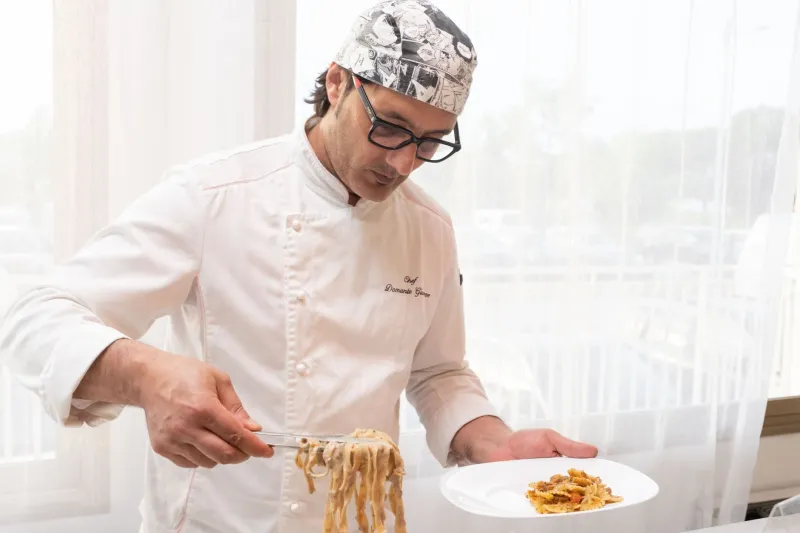
Here's something most delivery customers don't think about: the moment you place your order, a Paramus Italian kitchen isn't just pulling pre-made food from a warming shelf. In most of these places, your meal is being built from a point close to scratch — or as close as a busy dinner service allows.
Sauces get finished to order. Pasta gets dropped into boiling water at a calculated time so it arrives at your door still with a little bite to it, not a soggy mess. Proteins get plated at the last possible moment. All of that requires coordination, and coordination requires time.
What these kitchens have figured out — and what the big chains haven't — is that the delivery window itself is part of the cooking process. The packaging, the heat retention, the way a dish settles during the ride: a good kitchen accounts for all of it. That's not something you can do if you're racing a stopwatch.
The Customer Who Keeps Coming Back
Here's the counterintuitive part: the restaurants in Paramus that are most upfront about their timing — the ones that tell you honestly that your lasagna will be there in fifty to sixty minutes and mean it — tend to have the most loyal customer base in the area.
It sounds backwards. Wouldn't slower delivery drive people away? In practice, the opposite seems to happen. When a restaurant consistently delivers food that tastes the way it's supposed to, customers stop caring about the clock. They start planning around the wait instead of resenting it. They open a bottle of wine. They set the table. They treat the delivery like an actual meal instead of a pit stop.
"Our regulars know," says another Paramus restaurant owner who's watched delivery platforms come and go over the years. "They order early. They don't stress. And when the food gets there, it's right. That's why they call back."
The contrast with chain behavior is stark. Fast delivery creates a transaction. Consistent quality creates a relationship. And in a suburban market like Paramus — where word of mouth still travels fast and the same families order again and again — relationships are everything.
Why Paramus Is the Right Place for This Philosophy
This approach works partly because of the kind of community Paramus is. Unlike Manhattan, where diners are constantly cycling through new options and novelty is its own reward, Paramus runs on familiarity. People have their spots. They've been ordering from the same Italian place for years, sometimes decades. Their kids grow up eating the same chicken cutlets their parents did.
That loyalty creates space for a restaurant to have an honest conversation with its customers about time. A first-time user on a delivery app might bounce if the estimated window is long. But a regular who's been ordering from you for three years? They know what they're getting. They trust the kitchen. The wait is just part of the ritual.
It also helps that Paramus's Italian restaurants aren't trying to compete on the same terms as the big platforms. They're not chasing volume. They're not trying to be everything to everyone. They've made a deliberate choice to do one thing — cook real Italian food — and do it without cutting corners on the process.
How to Make the Wait Work for You
If you're ordering from one of Paramus's better Italian spots and you've got a forty-five to sixty minute window, here's how to use it well. Pour yourself something to drink — a glass of Chianti, a sparkling water with lemon, whatever you've got. Set out plates and silverware so the meal feels intentional. If you've got kids or guests, get them settled before the food arrives so you're not scrambling at the door.
Most importantly, resist the urge to open the bag the second the driver hands it over. Give it two minutes. Let the heat redistribute. That's not a delay — that's the last step of the cooking process, and it makes a real difference.
The Bottom Line
The fastest delivery isn't always the best delivery. Paramus's independent Italian kitchens have built their reputations on a simple bet: if the food is genuinely good, people will wait for it. And they'll come back because of it.
In a delivery landscape dominated by apps promising speed above everything else, that's a quiet but meaningful act of confidence. These restaurants are essentially saying: we trust our food enough to let it take the time it needs. You should trust it too.
So far, the regulars are proving them right.